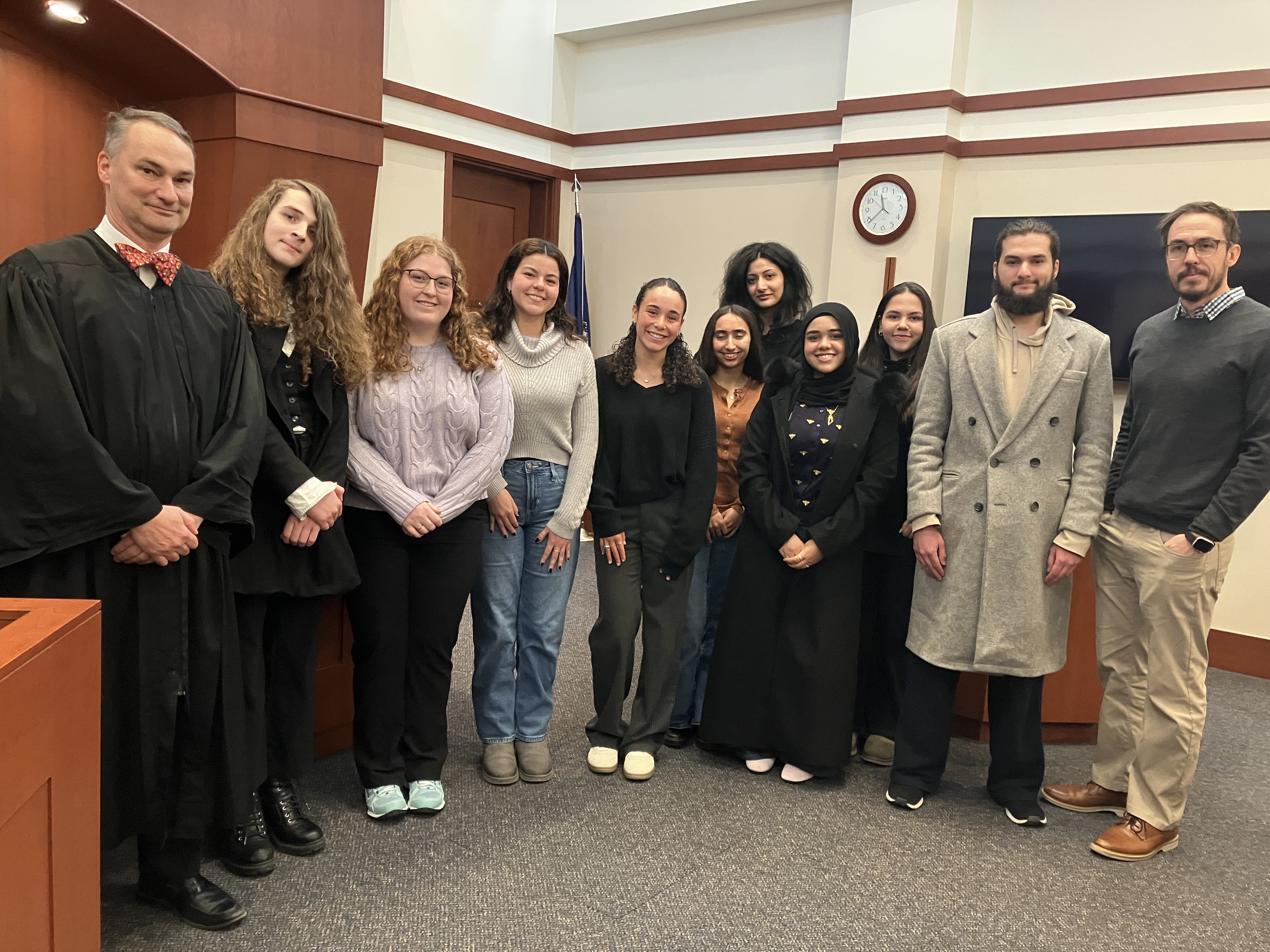
Earlier this week, the first group of students in my Politics of Prisons class visited the Fairfax Juvenile and Domestic Relations Court. They observed court proceedings firsthand and then engaged in a lively, wide-ranging Q&A with Judge Petit.
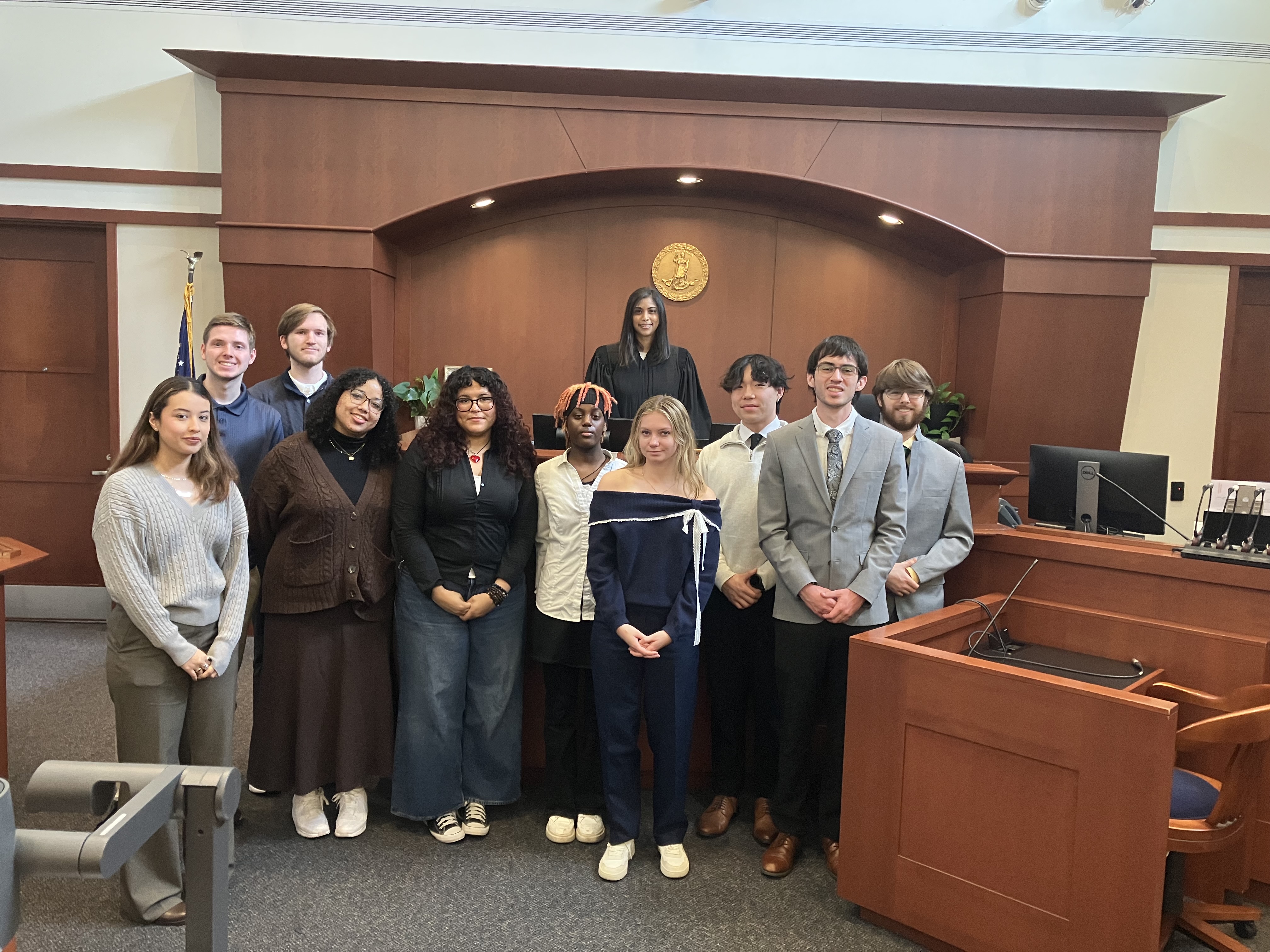
On a follow-up visit, a second group of students watched a trial and then met with Judge Nadaraja to discuss court procedure, the responsibilities of judging, and life on the bench.
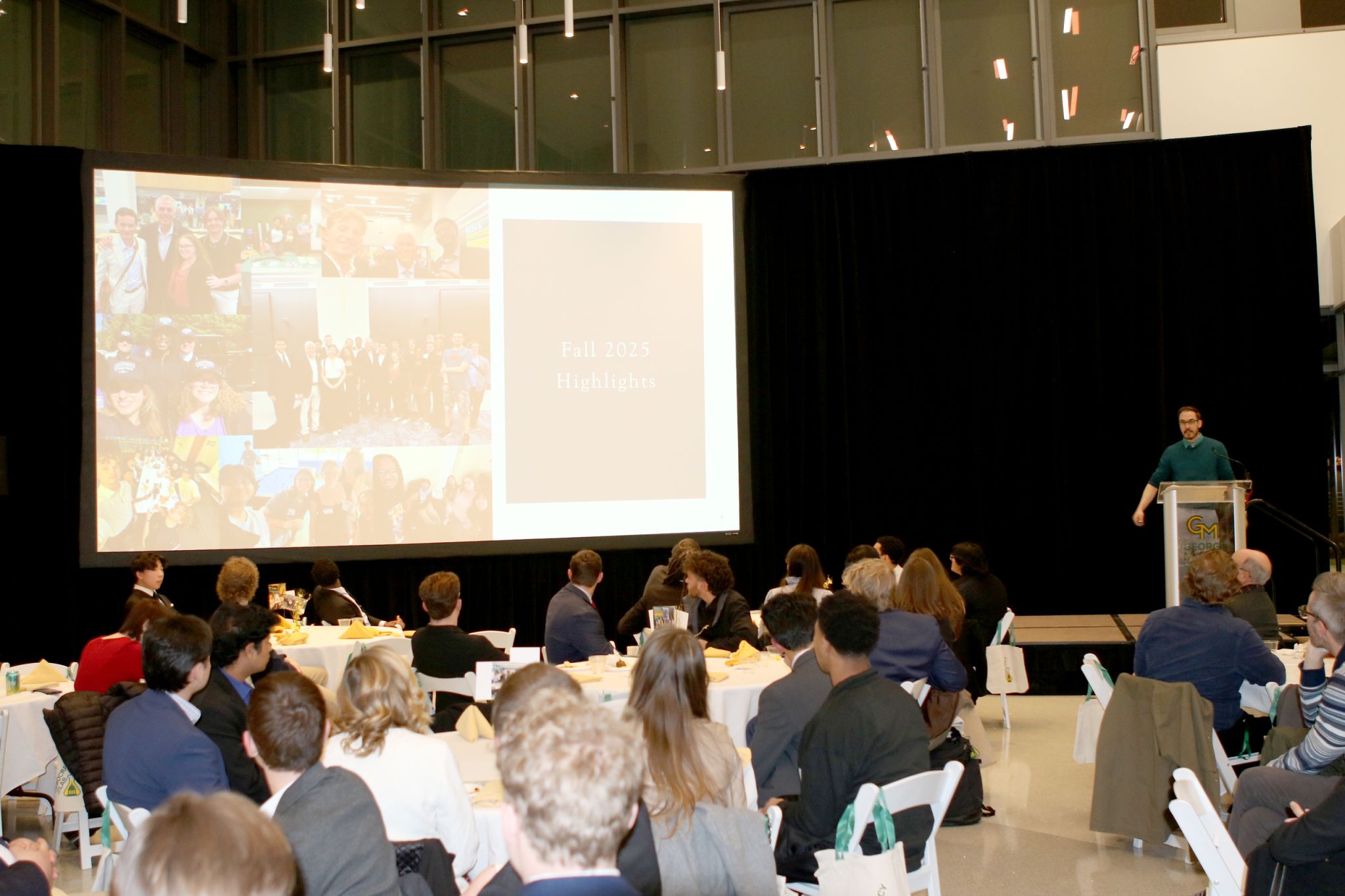
On January 23, Assistant Director of Student Engagement Emilee Duffy and I welcomed First-Year Democracy Lab students back for our annual Welcome Back Dinner—a chance to pause, reconnect, and take stock of what this learning community has already built together.
Over dinner, students, faculty, and staff shared conversation and reflected on a semester shaped by shared courses, events, and projects. One highlight of the evening was a series of fast-paced “Ignite Talks,” where Profs. Philip Martin, Kelly Richter, Lucas Núñez, Catherine Maclean, and Meghan Garrity each took on the challenge of presenting their research in just five minutes, using 20 automatically advancing slides. The format is demanding, lively, and always a student favorite. And this year was no exception.
As my first year serving as director of the Democracy Lab, the evening felt especially meaningful. The dinner captured what makes the program work: intellectual curiosity, generosity across roles, and a strong sense of community that extends beyond the classroom. I’m excited to see where the rest of the year takes us.
Later this week I’ll be moderating a roundtable and presenting a paper at the annual meeting of the Law & Society Association. The theme of the roundtable is “The Reproduction of Legal Order” and includes a number of talented early-career political theorists. The panel is titled “Analyzing Change Across the Penal Field” and I’ll be presenting an article related to my current book project. June 6-7.
In June I’ll be facilitating a roundtable at the Law and Society Association’s annual meeting on “the reproduction of legal order.” Participants include Ainsley LeSure (Brown), Yuna Blajer de la Garza (Loyola), Anna Daily (Sacramento), Kathryn Heard (Dickinson), and Marcus Board Jr. (Howard). June 6-9 in Denver, Colorado.
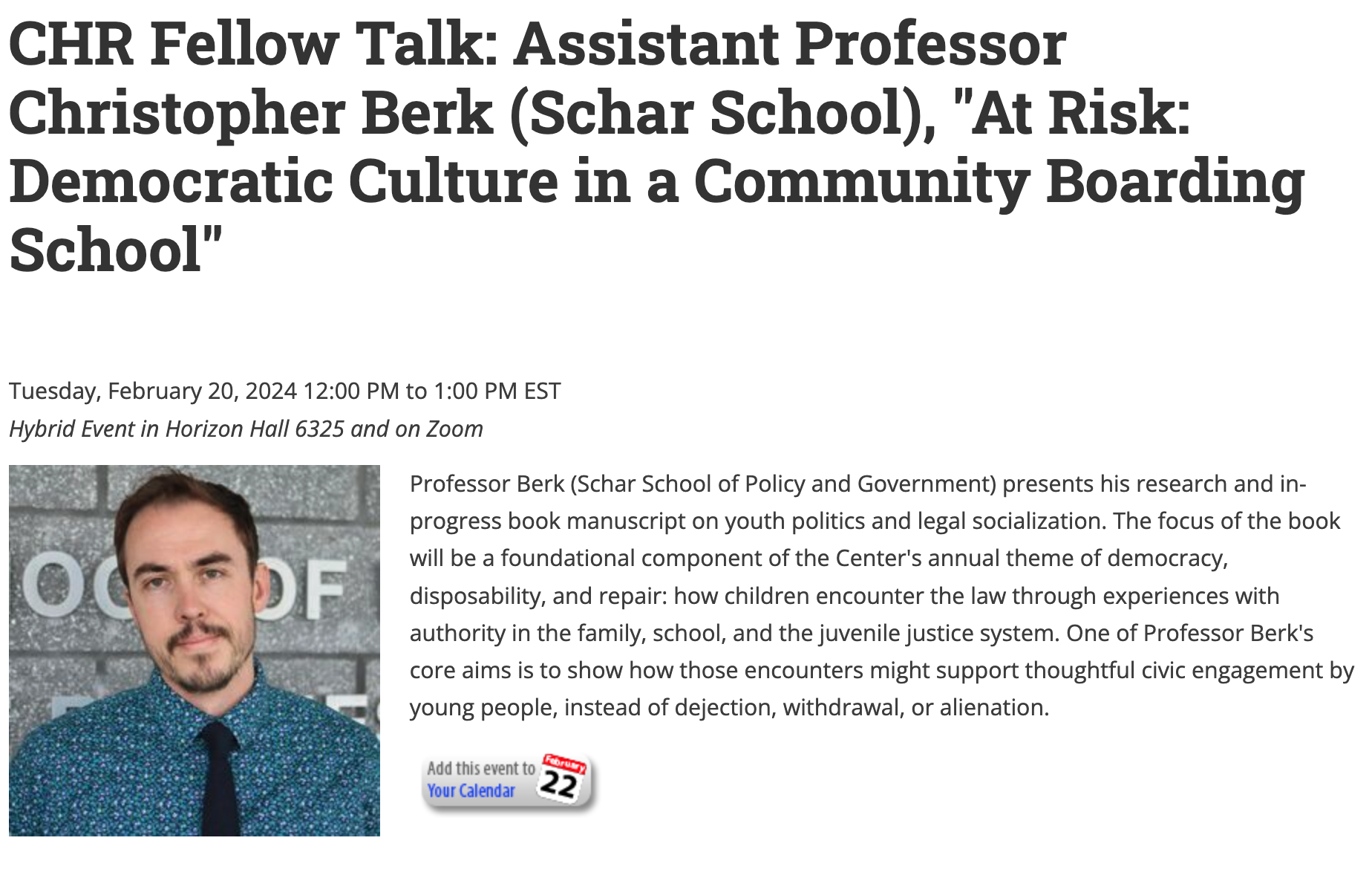
This term I’m a fellow at the Center for Humanities Research at GMU. I’ll be using my time at the Center to work on my new book project — the working title is At Risk: Poverty and Democratic Culture in a Community Boarding School.
In February, I’ll participate in an APSA-organized research group led by Benjamin Gonzalez O’Brien and Christopher Towler. The purpose of this group is to assist researchers in preparing their material for publication in the Journal of Race, Ethnicity, and Politics (JREP) potentially as part of a special issue.
Last month the IRB at Mason approved my follow-up study. Over the month of November I’ll be in the field interviewing current staff and former students of a boarding school, collecting records at the institution, and photographing documents in nearby archives. I’m absolutely thrilled to be diving headfirst into this project!
I’m presenting the most recent draft of my paper on legal socialization and resistance next week at the WPSA Virtual Community Mini-Conference in Political Theory. Join if you can — Saturday, Sept. 9 at noon (ET).
I’m on leave this fall. Over the next few months I’ll be working on my next project on youth politics and legal socialization. (The current, sure-to-change working title is Governing Children.) I’m pairing ethnographic data I collected in 2013-14 at a boarding school with a ten year follow-up (2023-24). It will be a joy to immerse myself in a new book-length project and, in the spring, to start assembling a manuscript.


 Christopher D. Berk